Install the old email client
In BlueMind 5, only the new email client (webmail) developed by BlueMind is installed and active by default. However, it is possible to install the old webmail, based on Roundcube 0.8.5, and grant users access to it.
This procedure is no longer valid on Debian from version 13 “Trixie” onwards: from this version onwards, the old email client can no longer be installed.
Installing
To enable users to access the old email client, install the dedicated package on the core server:
- Debian/Ubuntu
- Red Hat/CentOS
apt install bm-webmail
yum install bm-webmail
Then restart the bm-core service:
service bm-core restart
Please note that this operation will temporarily interrupt access to BlueMind and may log users out, meaning they are likely to lose their work in progress. The service must therefore be restarted at a time when there is no risk of disruption to users.
Enabling and disabling
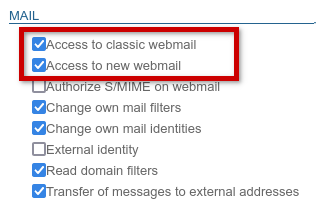
Access to both webmail services is managed via Mail roles. Depending on the role(s) assigned, it is possible to grant users access to the old webmail, the new webmail, or both, either on an individual basis or by group.
To assign the role(s):
- Go to the page Directories > Directory entries
- Select the desired user or group
- Assign the ‘Access to classic webmail’ role(s) available in the ‘Email’ section of the roles:
- Save
By enabling just one of these roles, the administrator forces the use of one email client or the other.
By enabling both roles, the administrator gives the user a choice.
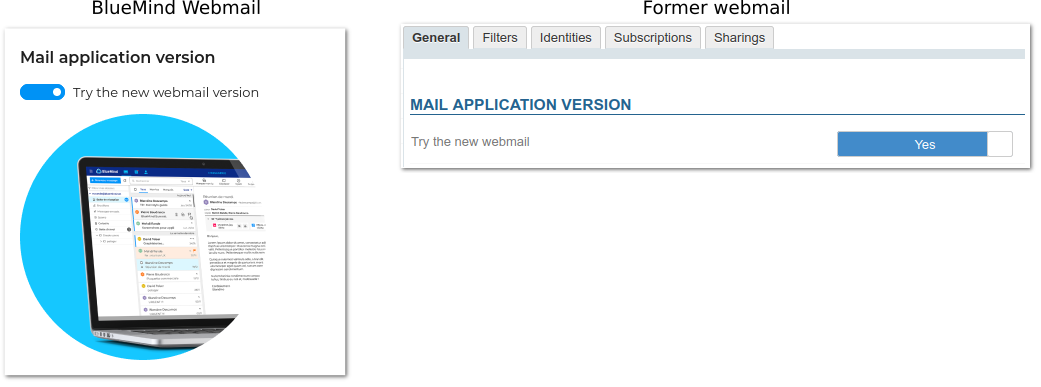
In the latter case, the user will see a button in their interface allowing them to switch between the two clients:

Users can also switch between services via their settings, under the ‘Email’ section:
Deactivation by the administrator
Should a user encounter a problem where they are unable to switch from one client to another, the administrator can, as in the case of forced switching, deactivate either role as required: the user will then be automatically redirected to the only client to which they have access.